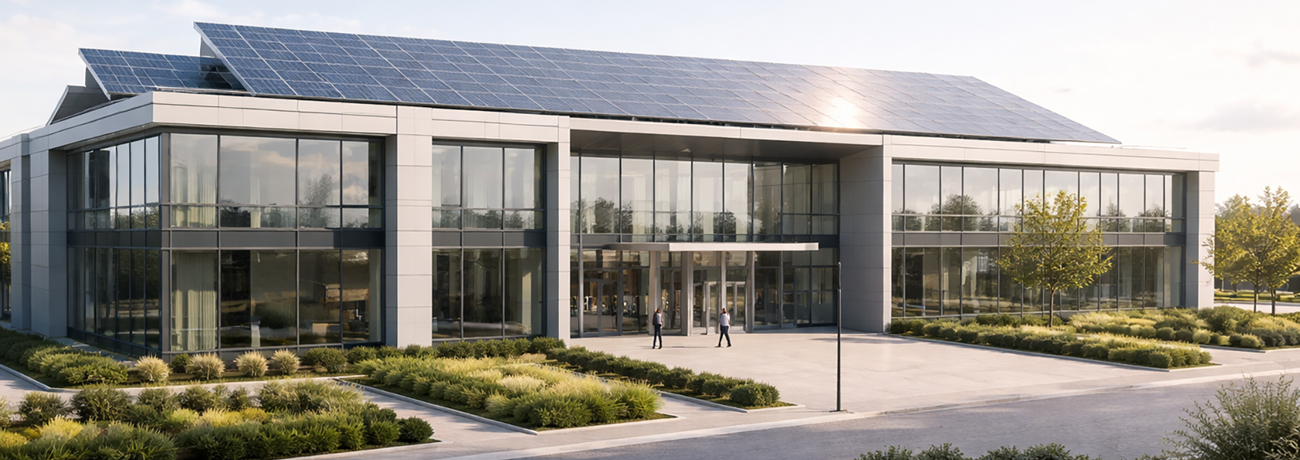
Industrial solar installation only makes sense when it matches the way the building actually uses electricity. A roof may look ideal from the ground, but that is only part of the picture. Load profile, operating hours, roof construction, access, export limits and maintenance routines all shape what can be done and whether it is worth doing.
A factory that runs hard through the middle of the day may use a large share of the electricity on site. Another may have a heavy early shift, variable machinery demand and little steady daytime consumption. The difference matters. The same roof area can produce a very different financial outcome depending on how the site behaves once the working day begins.
That is why a proper installation process begins with usage data and site conditions. Not a panel count. Not a generic savings claim.
Age, structure, covering type, loading capacity and expected remaining life all need checking. There is no point mounting a long-life system on a roof that may need major work too soon afterwards.
Half-hourly data, meter information, operating patterns and known peaks help show how much solar generation may be used on site and where the bigger opportunities sit.
Some sites can export spare power easily enough. Others face limits from the local network. That changes system size, layout and whether battery storage needs to be part of the discussion.
A survey is normally the point where broad ideas meet real-world constraints. Roof access, plant locations, cable routes, fire breaks, walkways, inverter positions and shutdown planning all come into focus. On industrial sites there are usually more moving parts than on smaller commercial premises. Ventilation equipment, rooflights, fragile surfaces, crane access, exclusion zones and shift patterns all have a say.
There is also the question of what cannot be interrupted. Some buildings can tolerate staged works over several days. Others cannot have key boards isolated during production, dispatch or temperature-sensitive operations. Installation planning needs to fit around the business rather than assume the site will stop for convenience.
Once survey information is in hand, the design stage works through panel layout, string design, inverter sizing, cable routing, mounting method and connection arrangements. Orientation and shading matter, but so do practical details such as maintenance access, safe separation from roof edges, and how future roof work would be handled.
Industrial roofs often bring choices that are not obvious at first glance. Cover the maximum possible area, or leave space around serviceable plant. Use a layout that chases output, or one that simplifies access and installation. Push for a larger system, or size it closer to daytime demand to reduce export issues. There is usually a balance to strike.
Some sites also benefit from a wider conversation about battery storage, peak demand management or backup resilience. In those cases the solar installation becomes part of a broader on-site power plan rather than a stand-alone addition.
None of these automatically stops a project, but each can change cost, timing or system design. Sometimes quite sharply.
When the project moves to site, work usually needs to be phased sensibly. Deliveries, access equipment, lifting operations, roof safety controls and electrical works all need coordination. On live industrial premises that often means separating installation activities from traffic movements, loading areas, staff routes or production-critical zones.
There may be several teams involved at different stages: roof access and safety, mounting system installation, panel fitting, cable runs, inverter installation and final electrical connection. For some businesses the main concern is disruption. For others it is safety, timing or the condition of the roof. Either way, a good installation plan reduces surprises.
Electrical connection work also needs careful timing. The changeover and commissioning phase may require planned isolations, testing and verification. On sites where downtime carries a real cost, that part of the job deserves more attention than it sometimes gets.
The installed system is checked electrically and mechanically, with protection settings, string performance and monitoring confirmed before full operation.
Where required, the final connection position and any export arrangements need to align with network approval and site electrical design.
Once live, the system should provide usable performance information so the site can see generation trends, identify faults and check whether the output broadly matches expectations.
The honest answer is that cost depends heavily on scale, roof type, access, electrical complexity and grid constraints. A straightforward installation on a large, modern industrial roof is a different job from a scheme involving older structures, awkward access and a live site that cannot easily be interrupted.
That said, cost is only one part of the decision. Businesses usually end up weighing a wider set of questions: how much of the generation is likely to be used on site, whether export restrictions cap the size, how long the roof will last, whether battery storage has a role, and how installation can be managed without upsetting operations. Those details often make more difference than chasing the lowest headline price.
The better projects tend to have a few things in common. The roof condition was checked properly. The system was sized with real site usage in mind. Access for maintenance was thought about early. Monitoring was set up sensibly. The electrical connection was planned around the way the site actually runs.
Industrial solar is not simply a case of covering roof space and hoping for the best. When the survey, design and installation stages are handled well, it can become a useful part of how a site manages electricity over the long term. When those basics are rushed, problems tend to show up later, in awkward maintenance, poor utilisation, export limitations or unexpected installation complications.
If you are considering industrial solar installation, the sensible starting point is a review of how the building behaves now. That means usage patterns, roof condition, electrical setup and likely operational constraints. Once those are understood, it becomes much easier to judge whether solar alone is suitable or whether a broader mix of on-site power options deserves attention.